
Logo SPVM
  • News
  • Youth Zone
  • Seniors Zone
  • Media Zone
  • FR
Find
Information
Or find information: By category In alphabetical order Most requested topics
Discover
SPVM
  • Organization
  • Who does what?
  • Discover police work
  • Police museum
  • Projects
  • In Memoriam
Neighbourhood
Police

Search by neighbourhood

See all PDQs

Search by postal code

Search a police station by address

Discover your neighbourhood police
Wanted/Missing
persons
  • Missing persons
  • Potential victims
  • Wanted persons
  • Unsolved murders
  • Unidentified remains
  • Top 10 Most Wanted in Québec
  • What to do if a person goes missing
Jobs and
Career
Contact us

Emergencies Call   911

Contact us
Skip to main content
News Youth Zone Seniors Zone Media Zone FR Search by keyword(s)
Service de police de la Ville de Montréal
Search
FR EN

Find information

  • By category
  • Alphabetical order
  • Most requested topics
  • Online police report
  • Background check
  • Access to information

Discover the SPVM

  • Organization
  • Who does what?
  • Discover police work
  • Police museum
  • Our projects
  • In Memoriam

Wanted persons

  • Missing persons
  • Potential victims
  • Wanted suspects
  • Unsolved murders
  • Unidentified bodies

Services and contact

  • Neighbourhood police
  • Jobs and careers
  • Contact us
  • Youth Zone
  • Seniors Zone
  • Media Zone
In case of emergency 911
Home› Discover SPVM›Discover police work›Patrolling› Local police officer

In this section

  • Community relations officer
  • Éclipse unit officer
  • Local police officer
  • Marine patrol officer - Road safety
  • Montréal's Métro (subway) officer
  • Motorcycle officer
  • Neighbourhood road safety officer
  • Traffic patrol officer

Local police officer

Local police officer

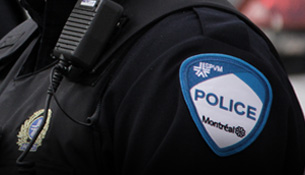
The SPVM has nearly 2000 local police officers across the 31 local police stations (PDQs). The local police officer is assigned to a specific sector. This approach is specific to the model for the local (neighbourhood) police.

Each day, these police officers patrol, according to a pre-established plan, the territory of each local police station (PDQ) and respond to 911 calls. They are the first responders for public safety in the communities of the people of Montréal. They are specialists in their community. They know its inhabitants and business owners. They identify safety issues in the neighbourhood and work to resolve them.

These police officers have a number of responsibilities:

  • Ensure road safety in their sector
  • Intervene with various community groups and with victims of criminal acts
  • Make sure that the laws and regulations are respected
  • Protect and safeguard the lives of residents of their neighbourhood area

They call upon other emergency units when the situation requires it and conduct arrests, when necessary, and then take suspects to detention areas.

Front-line officers

Local police officers are generally the first ones to arrive at a criminal event or accident. Therefore, they are required to carry out the initial steps of an investigation, such as:

  • Protect the scene
  • Communicate with the victims, witnesses and other people involved
  • Collect versions and evidence
  • Take statement
  • Try to locate the suspects
  • Retrieve items of evidence

Local officers are also able to provide assistance to the public and to victims of criminal acts by giving them advice and directing them to organizations that can help them.

Solo local police officer

Local police officers generally work in teams of two but a certain number do patrols on their own, these are the solo local police officers. These officers do not respond to all calls. They are mainly assigned to calls that involve taking reports, interventions in secured areas or road safety issues. Solo local police officers assume a support role with their patrol colleagues and may complete their intervention when possible.

Local support officer

Local police stations also count on the work from local support officers. These are the officers at the station's service desk. They are the first point of contact with the public. Support officers receive public citizens who come to the local police station. They help them with their requests, provide information or direct them to the right resources and help them in preparing event reports. They provide support to their police colleagues, according to the needs. They carry out certain administrative tasks and do searches in police databanks. 
Services

PDQNeighbourhood police SPVMInformation sheets SPVMJobs and careers
In case of emergency911
Follow the SPVM
Écusson du SPVM

Official website of the Service de police de la Ville de Montréal

© 2004-2026, all rights reserved.

Site map

Welcome message

  • العربية
  • български
  • Kreyòl
  • Español
  • Italiano
  • ایران
  • Português
  • Deutsch
  • ελληνικά
  • հայերեն
  • دری
  • Fon
  • ગુજરાતી
  • Innu
  • Lingala
  • Türk
  • Tiếng việt
  • English
  • Français

Find information

Looking for information? Browse our information sheets:

Search by keyword(s)
By category Alphabetical order Most requested topics
Ville de Montréal

I want to
communicate
with the SPVM

I want to
Work at
SPVM

I'm looking
for information

Emergencies Call   911

  • Follow the SPVM
logo SPVM

Official Website of Service de police de la Ville de Montréal (SPVM)
© 2004-2026, all rights reserved

Welcome message

العربية
български
Kreyòl
Español
Italiano
ایران
Português
Deutsch
ελληνικά
Õ°Õ¡ÕµÕ¥Ö€Õ¥Õ
دری
Fon
ગુજરાતી
Innu
Lingala
Türk
Tiếng việt
English
Français
info

I want to know about

Looking for specific information? View our information sheet:

logo Ville