
Fraud - Counterfeit Money
Counterfeiting currency is a criminal activity that affects both individuals and businesses. A counterfeit bill automatically results in a financial loss for the person who receives it. To reduce the risks, it is important to recognize the main security features of Canadian banknotes and to adopt good practices during transactions, whether they take place in a commercial setting or between private individuals.
How to spot a real bank note
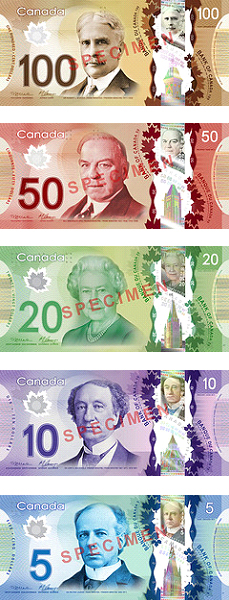
- Tilt the bill: the holographic features should change color on both the front and the back.
- Look at the transparent window: the portrait and the denomination should match on both sides of the note. Even on the back, the image must be clear.
- Scratch the edges of the transparent window with your fingernail: if it peels off, it’s a counterfeit. On a genuine bill, this area is completely smooth.
- Run your fingers over the bill to feel the raised ink on the large number, the shoulders of the large portrait, and the words “Banque du Canada” and “Bank of Canada”.
- If you are handed several bills, check a few of them. Fraudsters often mix fake notes with real ones.
- If you receive multiple bills, compare the serial numbers: if they are identical, refuse them.
Advice for individuals
An increase in counterfeit bills has been observed, particularly in transactions between individuals. It is therefore important to be vigilant when meeting someone to complete a sale arranged through an online marketplace.
- If you have any doubts during a transaction, don’t take any chances: refuse the money.
- If you realize afterward that the bills may be counterfeit, gather all relevant details about the transaction (screenshots, information shared, etc.) and contact your local police station.
- For in‑person meetings related to sales arranged on online platforms, use the SPVM’s Safe Trading Zones. These areas are monitored by cameras 24/7, helping deter individuals with malicious intent.
Advice for retailers
- Be especially careful during busy periods, as fraudsters are more likely to strike.
- Pay attention to customers who want to pay for something with a higher bill than needed.
- If a customer gives you several bills, compare the serial numbers. Matching numbers indicate a counterfeit reproduction.
- Always compare a suspicious note with an authentic note.
- Get a counterfeit detector.
- Keep in mind that a person who pays you with a fake bill may be the innocent victim of fraud.
- If you think you have been given counterfeit notes, contact the police.
Find out more
Counterfeit prevention - Bank of Canada

Official Website of Service de police de la Ville de Montréal (SPVM)
© 2004-2026, all rights reserved
Welcome message |
|
|
العربية български Kreyòl Español Italiano ایران Português Deutsch ελληνικά Õ°Õ¡ÕµÕ¥Ö€Õ¥Õ¶ |
دری Fon ગુજરાતી Innu Lingala Türk Tiếng việt English Français |

I want to know about
Looking for specific information? View our information sheet: